Houston,Texas Dog Registration Information
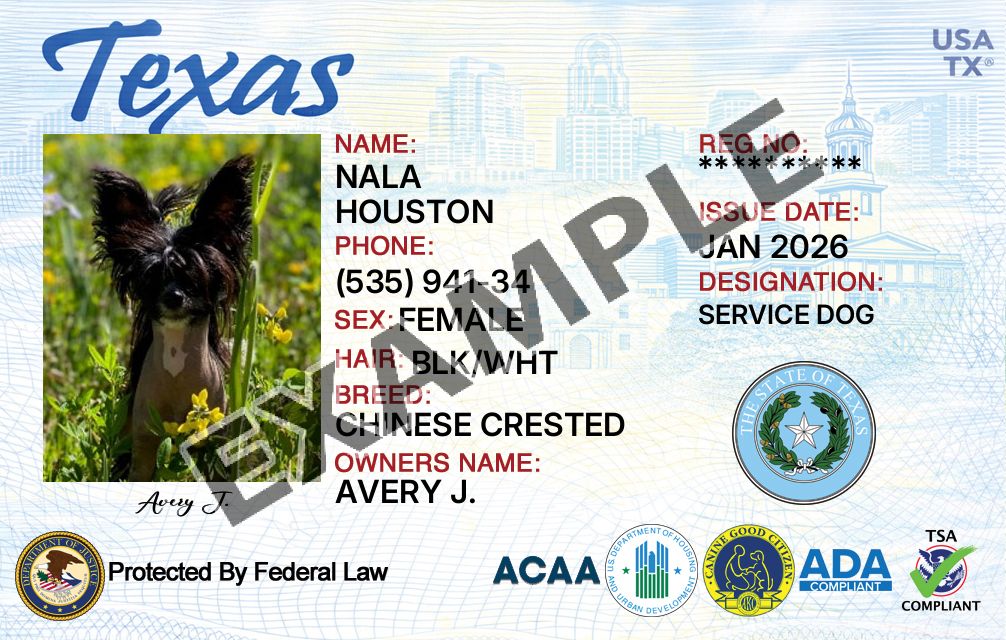
State Licensed, Service Dogs and Emotional Support Dogs in Texas
If you’re asking, “where do I register my dog in Houston, Texas for my service dog or emotional support dog?” you’re not alone. The key thing to know is that registering (licensing) your dog is a local public health and animal control process (usually tied to rabies vaccination), while service dog legal status and emotional support animal (ESA) rules are separate legal topics that generally do not require a special “service dog registration” with the city.
This page explains how a dog license in Houston, Texas typically works, which official offices can help, what rabies documentation you may need, and how licensing differs from service dog and ESA rules—so you can confidently handle both the local licensing step and your service dog/ESA paperwork needs.
Where to Register or License Your Dog in Houston, Texas
Because licensing is often handled locally, where you register a dog in Houston, Texas can depend on whether you live inside the City of Houston limits or in unincorporated Harris County (or another nearby city). Below are examples of official offices that commonly handle pet registration/licensing, animal control response, or rabies enforcement for the Houston area.
City of Houston — BARC Animal Shelter & Adoptions (Pet Registration / Way Home)
Harris County Public Health — Veterinary Public Health (Pet Licensing / Rabies & Public Health Enforcement)
Harris County Public Health (Main Department Contact)
Overview of Dog Licensing in Houston, Texas
What “registering your dog” usually means
In most Houston-area contexts, “registering” your dog means obtaining or maintaining a local pet license/registration record that shows your dog is currently vaccinated for rabies and associated with a responsible owner. This helps animal control return lost pets, supports rabies enforcement, and is often required by local ordinance.
Rabies vaccination is the backbone of licensing
A current rabies vaccination (and a rabies vaccination certificate from a veterinarian) is commonly required to obtain a valid license/registration. In practical terms, licensing and rabies compliance go together: you typically vaccinate first, then license/register using the rabies documentation.
Service dog or ESA status is not the same as a pet license
Even if your dog is a service dog or emotional support animal, you may still need the same local licensing steps that apply to other dogs. A dog license in Houston, Texas is about local public health and animal control compliance, not a certification of service animal or ESA status.
How Dog Licensing Works Locally in Houston, Texas
Step 1: Confirm your jurisdiction (City of Houston vs. Harris County vs. another city)
Start by identifying whether your residence is within the City of Houston or in unincorporated Harris County (or another municipality). This matters because the “correct” answer to where to register a dog in Houston, Texas can differ by jurisdiction. Many residents interact with:
- City of Houston (BARC) for city pet registration and animal control services.
- Harris County Public Health — Veterinary Public Health for county pet licensing in applicable areas and rabies-related public health processes.
Step 2: Get a current rabies vaccination and keep the certificate
Your veterinarian typically issues a rabies vaccination certificate after vaccination. Keep a digital copy and a printed copy. If you’re ever asked to show compliance (for a license, for housing paperwork, or after an incident like a bite report), the certificate is the foundational document.
Step 3: Register/license through the appropriate local office
Once you have rabies documentation, contact the appropriate local office to apply for or renew your license/registration. The office may require additional details such as your address, contact information, and your pet’s identifying information (often including microchip data).
Step 4: Renew on time and update owner/contact info
Licenses/registrations often require renewal on a regular schedule. Also update your contact information promptly if you move or change phone numbers. Accurate records increase the odds your dog is returned quickly if picked up by animal control.
Service Dog Laws in Houston, Texas
What makes a dog a service dog (in practice)
A service dog is generally a dog that is individually trained to perform specific tasks for a person with a disability (for example, guiding, alerting, retrieving, interrupting harmful behaviors, or assisting with mobility or medical episodes). The defining feature is task-trained assistance connected to a disability.
Do you need to “register” a service dog with the city?
In most day-to-day situations, there is no city-issued service dog registry that you must complete to make a dog a service dog. Instead, the service dog’s legal standing is based on:
- The handler’s disability status under applicable law, and
- The dog’s training to perform disability-related tasks.
However, even a service dog may still need routine local compliance such as rabies vaccination and a local license/registration, depending on the jurisdiction—because that process is about public health and animal control, not access rights.
Best practice: keep “access-ready” documentation (without relying on online registries)
While you generally are not required to carry a “service dog registration,” it’s wise to keep your dog’s rabies certificate, microchip information, and licensing/registration confirmation organized. If your service dog is ever lost or involved in an incident, these records can reduce delays.
Emotional Support Animal Rules in Houston, Texas
What an emotional support animal (ESA) is
An emotional support animal provides comfort by presence and can be part of a person’s mental health care plan. Unlike service dogs, ESAs are generally not task-trained for disability-related work in the same way service dogs are.
ESA documentation is usually housing-focused (not a city pet license)
ESA status most commonly comes up with housing requests. That process typically involves documentation from a qualified healthcare professional supporting the need for an ESA as an accommodation. This is separate from the local pet license/registration process.
Even if your dog is an ESA, you may still need a local license
An ESA designation does not automatically replace public health requirements like rabies vaccination or local licensing/registration. If you’re looking for animal control dog license Houston help for an ESA, the same local offices listed above are generally the correct starting point.
Frequently Asked Questions
Start with local pet licensing/registration through the official office that matches your jurisdiction:
- City of Houston residents: Contact BARC (Way Home / Pet Registration).
- Unincorporated Harris County residents: Contact Harris County Public Health — Veterinary Public Health regarding pet licensing.
Service dog and ESA status are separate from a pet license; licensing is still often required for rabies compliance and local animal control purposes.
No. A dog license in Houston, Texas is a local registration tied to public health and animal control (often rabies documentation and owner information). A service dog is defined by disability law and the dog’s task training. Licensing does not “certify” service dog status.
In many situations, there is no required government-issued “service dog registration card.” Practical compliance usually focuses on lawful behavior, the dog’s training, and standard pet requirements like rabies vaccination and local licensing/registration where applicable.
Requirements can vary by office and jurisdiction, but most owners should be prepared with proof of rabies vaccination and basic identifying information for the dog and owner.
If you’re registering as part of a move, renewal, or an update to your records, you may also need proof of residency and payment for applicable fees.
If you’re outside City of Houston limits, your licensing and animal control responsibilities may fall under county services or a different municipality. Harris County Public Health’s Veterinary Public Health program is a common starting point for county licensing questions, while BARC is typically the starting point for City of Houston residents.
Local laws, office locations, and contact details may change. Residents should verify the most current information with their local animal services office in Houston, Texas.
Register A Dog In Other Houston Counties
Select your county from the dropdown below to get started with your dog’s ID card. Requirements and license designs may vary by county, so choose your location to see the correct options and complete your pup’s registration.
- Anderson County Dog Registration
- Andrews County Dog Registration
- Angelina County Dog Registration
- Aransas County Dog Registration
- Archer County Dog Registration
- Armstrong County Dog Registration
- Atascosa County Dog Registration
- Bailey County Dog Registration
- Bandera County Dog Registration
- Bastrop County Dog Registration
- Baylor County Dog Registration
- Bee County Dog Registration
- Bell County Dog Registration
- Bexar County Dog Registration
- Blanco County Dog Registration
- Borden County Dog Registration
- Bosque County Dog Registration
- Bowie County Dog Registration
- Brazoria County Dog Registration
- Brazos County Dog Registration
- Brewster County Dog Registration
- Briscoe County Dog Registration
- Brooks County Dog Registration
- Brown County Dog Registration
- Burleson County Dog Registration
- Burnet County Dog Registration
- Caldwell County Dog Registration
- Calhoun County Dog Registration
- Callahan County Dog Registration
- Cameron County Dog Registration
- Camp County Dog Registration
- Carson County Dog Registration
- Cass County Dog Registration
- Castro County Dog Registration
- Chambers County Dog Registration
- Cherokee County Dog Registration
- Childress County Dog Registration
- Clay County Dog Registration
- Cochran County Dog Registration
- Coke County Dog Registration
- Coleman County Dog Registration
- Collin County Dog Registration
- Collingsworth County Dog Registration
- Colorado County Dog Registration
- Comal County Dog Registration
- Comanche County Dog Registration
- Concho County Dog Registration
- Cooke County Dog Registration
- Coryell County Dog Registration
- Cottle County Dog Registration
- Crane County Dog Registration
- Crockett County Dog Registration
- Crosby County Dog Registration
- Culberson County Dog Registration
- Dallam County Dog Registration
- Dawson County Dog Registration
- Deaf Smith County Dog Registration
- Delta County Dog Registration
- Denton County Dog Registration
- DeWitt County Dog Registration
- Dickens County Dog Registration
- Dimmit County Dog Registration
- Donley County Dog Registration
- Duval County Dog Registration
- Eastland County Dog Registration
- Ector County Dog Registration
- Edwards County Dog Registration
- Ellis County Dog Registration
- Erath County Dog Registration
- Falls County Dog Registration
- Fannin County Dog Registration
- Fayette County Dog Registration
- Fisher County Dog Registration
- Floyd County Dog Registration
- Foard County Dog Registration
- Fort Bend County Dog Registration
- Franklin County Dog Registration
- Freestone County Dog Registration
- Frio County Dog Registration
- Gaines County Dog Registration
- Galveston County Dog Registration
- Garza County Dog Registration
- Gillespie County Dog Registration
- Glasscock County Dog Registration
- Goliad County Dog Registration
- Gonzales County Dog Registration
- Gray County Dog Registration
- Grayson County Dog Registration
- Gregg County Dog Registration
- Grimes County Dog Registration
- Guadalupe County Dog Registration
- Hale County Dog Registration
- Hall County Dog Registration
- Hamilton County Dog Registration
- Hansford County Dog Registration
- Hardeman County Dog Registration
- Hardin County Dog Registration
- Harris County Dog Registration
- Harrison County Dog Registration
- Hartley County Dog Registration
- Haskell County Dog Registration
- Hays County Dog Registration
- Hemphill County Dog Registration
- Henderson County Dog Registration
- Hidalgo County Dog Registration
- Hill County Dog Registration
- Hockley County Dog Registration
- Hood County Dog Registration
- Hopkins County Dog Registration
- Howard County Dog Registration
- Hudspeth County Dog Registration
- Hunt County Dog Registration
- Hutchinson County Dog Registration
- Irion County Dog Registration
- Jack County Dog Registration
- Jackson County Dog Registration
- Jasper County Dog Registration
- Jeff Davis County Dog Registration
- Jefferson County Dog Registration
- Jim Hogg County Dog Registration
- Jim Wells County Dog Registration
- Johnson County Dog Registration
- Jones County Dog Registration
- Karnes County Dog Registration
- Kaufman County Dog Registration
- Kendall County Dog Registration
- Kenedy County Dog Registration
- Kent County Dog Registration
- Kerr County Dog Registration
- Kimble County Dog Registration
- King County Dog Registration
- Kinney County Dog Registration
- Kleberg County Dog Registration
- Knox County Dog Registration
- Lamar County Dog Registration
- Lamb County Dog Registration
- Lampasas County Dog Registration
- LaSalle County Dog Registration
- Lavaca County Dog Registration
- Lee County Dog Registration
- Leon County Dog Registration
- Liberty County Dog Registration
- Limestone County Dog Registration
- Lipscomb County Dog Registration
- Live Oak County Dog Registration
- Llano County Dog Registration
- Loving County Dog Registration
- Lynn County Dog Registration
- Madison County Dog Registration
- Marion County Dog Registration
- Martin County Dog Registration
- Mason County Dog Registration
- Matagorda County Dog Registration
- Maverick County Dog Registration
- McCulloch County Dog Registration
- McLennan County Dog Registration
- McMullen County Dog Registration
- Medina County Dog Registration
- Menard County Dog Registration
- Midland County Dog Registration
- Milam County Dog Registration
- Mills County Dog Registration
- Mitchell County Dog Registration
- Montague County Dog Registration
- Montgomery County Dog Registration
- Moore County Dog Registration
- Morris County Dog Registration
- Motley County Dog Registration
- Nacogdoches County Dog Registration
- Navarro County Dog Registration
- Newton County Dog Registration
- Nolan County Dog Registration
- Nueces County Dog Registration
- Ochiltree County Dog Registration
- Oldham County Dog Registration
- Orange County Dog Registration
- Palo Pinto County Dog Registration
- Panola County Dog Registration
- Parker County Dog Registration
- Parmer County Dog Registration
- Pecos County Dog Registration
- Polk County Dog Registration
- Potter County Dog Registration
- Presidio County Dog Registration
- Rains County Dog Registration
- Randall County Dog Registration
- Reagan County Dog Registration
- Real County Dog Registration
- Red River County Dog Registration
- Reeves County Dog Registration
- Refugio County Dog Registration
- Roberts County Dog Registration
- Robertson County Dog Registration
- Rockwall County Dog Registration
- Runnels County Dog Registration
- Rusk County Dog Registration
- Sabine County Dog Registration
- San Augustine County Dog Registration
- San Jacinto County Dog Registration
- San Patricio County Dog Registration
- San Saba County Dog Registration
- Schleicher County Dog Registration
- Scurry County Dog Registration
- Shackelford County Dog Registration
- Shelby County Dog Registration
- Sherman County Dog Registration
- Smith County Dog Registration
- Somervell County Dog Registration
- Starr County Dog Registration
- Stephens County Dog Registration
- Sterling County Dog Registration
- Stonewall County Dog Registration
- Sutton County Dog Registration
- Swisher County Dog Registration
- Tarrant County Dog Registration
- Taylor County Dog Registration
- Terrell County Dog Registration
- Terry County Dog Registration
- Throckmorton County Dog Registration
- Titus County Dog Registration
- Tom Green County Dog Registration
- Travis County Dog Registration
- Trinity County Dog Registration
- Tyler County Dog Registration
- Upshur County Dog Registration
- Upton County Dog Registration
- Uvalde County Dog Registration
- Val Verde County Dog Registration
- Van Zandt County Dog Registration
- Victoria County Dog Registration
- Walker County Dog Registration
- Waller County Dog Registration
- Ward County Dog Registration
- Washington County Dog Registration
- Webb County Dog Registration
- Wharton County Dog Registration
- Wheeler County Dog Registration
- Wichita County Dog Registration
- Wilbarger County Dog Registration
- Willacy County Dog Registration
- Williamson County Dog Registration
- Wilson County Dog Registration
- Winkler County Dog Registration
- Wise County Dog Registration
- Wood County Dog Registration
- Yoakum County Dog Registration
- Young County Dog Registration
- Zapata County Dog Registration
- Zavala County Dog Registration